

Real-life examples commentary
Objective Critical assessment of behaviour.
Activity
- Group discussion on cases:
- Classmate of a weakling,
- Someone is deliberately skipping lessons.,
- The student hides his phone during the break and chews.
- Questions: Is this a lie? Who does it affect? What are the consequences? Emphasis: Honesty impacts the community.
Foreword (5–10 minutes)
The teacher writes the word 'honesty' on the board.
Questions for reflection
- Is fairness important only for me or also for others?
- Can dishonest behaviour harm the community?
The teacher emphasised: »Our actions also affect the people around us.«
MIDDLE SECTION (30 minutes)
1. Group work – real-life examples
Divide the pupils into smaller groups (4–5 pupils). Each group receives one example.
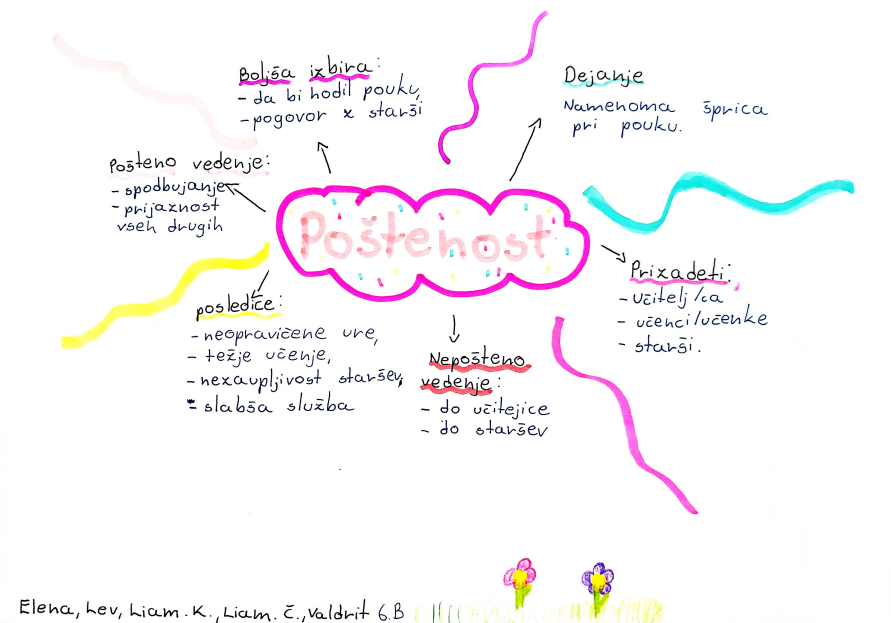
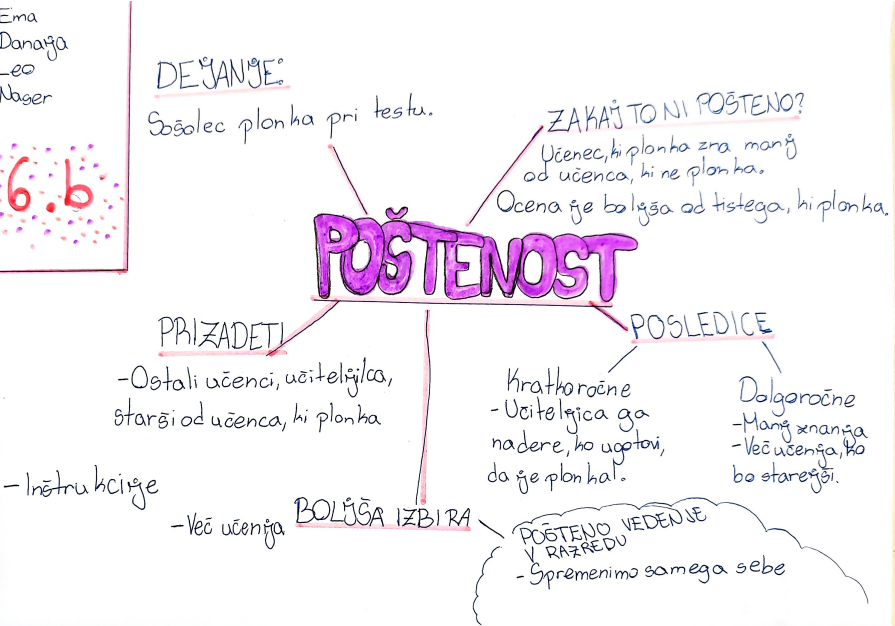
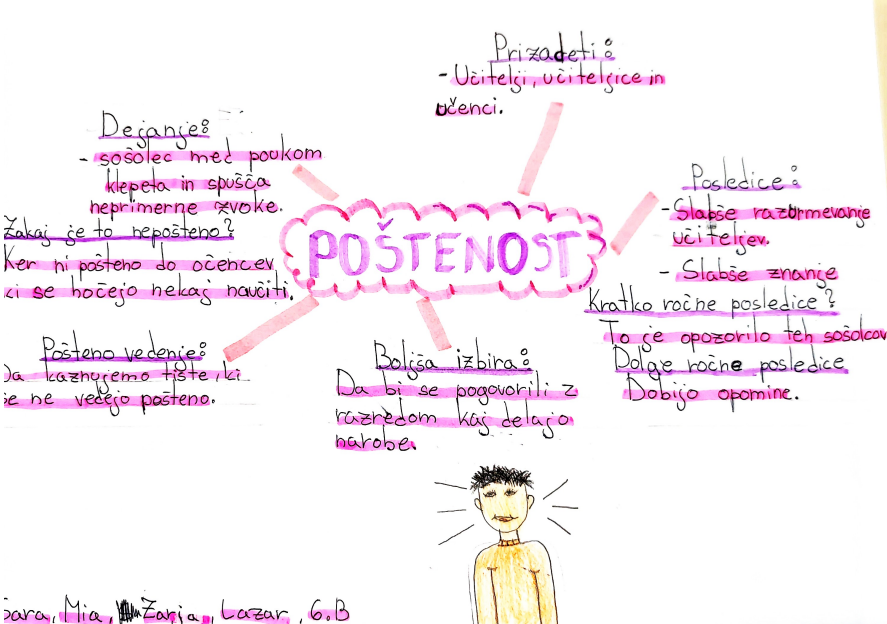
- Topics for discussion:
- A classmate cheats on a test.
- Someone is deliberately skipping lessons.
- During break time, the pupil hides his phone and chews gum.
- Each group discusses the questions and writes down their answers:
- Is this a lie or dishonest behaviour? Why?
- Who is affected by such behaviour? (the teacher, classmates, the pupil themselves …)
- What might the short-term and long-term consequences be?
- How could we resolve the situation in a fairer way?
- How do we feel when someone lies to us or hides their actions?
- What can a class do to encourage fair behaviour?
2. Presentation and group discussion
- The groups present their findings.
- The teacher leads the discussion and encourages students to present their arguments rather than make accusations.
- You can write on the board:
- Action
- Those affected
- Consequences
- A better choice
CONCLUSION (5-10 minutes)
The teacher’s closing remarks: »"Honesty affects the community – it either builds trust or destroys it."«
Primary School Kranj
 English (UK)
  Slovenščina
  Italiano
  Magyar