

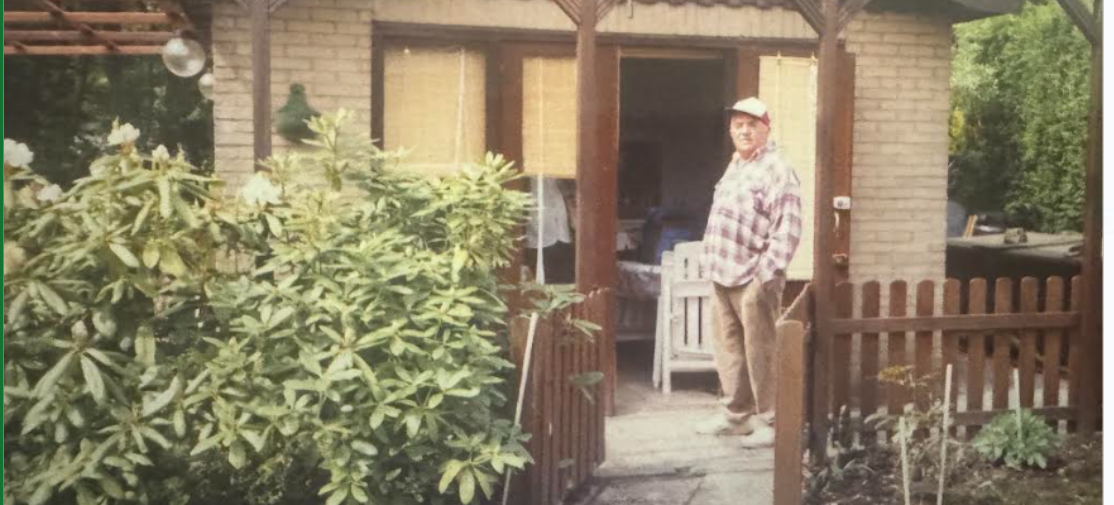
His small mobile home overlooking the sea stood in the shade of pine trees. Jože was always there in his shorts with a smile and a phrase like, here's mine again!"
As you approached, there was a smell of barbecue. There was no need to say anything, because Jože already knew why you had come. Fish, sausages and bread were frying on the grill, but his courgettes were the best. They were sliced thinly, each one fried to the right colour. They were salted, lightly peppered and drizzled with olive oil. He always said: »No Forums in the flesh, Forums is in the flasks. But you have to prepare those with heart.« And he really did it that way.
Jože was a man of the old variety - honest, quiet and stubborn in a good way. He never married. He lived alone, but he was never lonely. He looked at people with warmth and without judgement. »To me, the sea is for company«, he was able to say. »I greet him in the morning and say goodbye to him in the evening. What more could I want?« He had his own rhythm; in the summer he was in shorts, in the evening he would pass the time by listening to the radio, which played old Dalmatian songs softly. Sometimes he would sit on the doorstep and stare at the sun sinking behind Piran. He didn't say much, but when you were near him, you felt at peace.
His little house was nothing special. It was old and a little leaning, but clean and full of little things that mattered. On the shelf were shells that he had collected himself. There was a chair in the corner, on which was always hanging the apron he wore when he cooked on the barbecue. A small pot plant occupied the space by the window, growing in spite of the wind and the salt. And there was that smell of the sea, smoke and olive oil in the air.
But winter had already tested him a few years earlier that year. The roof of his little house could not withstand the storm and the rain, and it began to leak. Water seeped through the walls and stains appeared on the floor, but Jože told no one what was happening. He didn't know, or he didn't want to. He was that kind of man - cocky, proud and quiet. He didn't like to ask for help. He used to say that life had taught him perseverance; if something cracks, you just patch it up. But this time he could not help himself.
When we came back in the spring, it was clear that something was wrong. The ground was dark and slightly waterlogged, and there was the smell of damp in the air, and he was standing there smiling and barbecuing as if everything was as it was. »Yes, it dripped a little,« he said. »But I survived. It wasn't that bad.« But it was bad, he just didn't admit it.
We could not bear to see him living in such conditions. We all - me, my mother and my relatives - got to work. A neighbour from a nearby village was fixing the roof, another neighbour was replacing some boards, I was helping to clean, and my mother was preparing a pasta salad on the table. Jože did not sit still. He fired up the barbecue and said, »If you are already working, you will eat.« And again those zucchini for which he will always be remembered.
At the time, I was looking at it and thinking: How is it possible for someone who has so little to give so much? He had no money, he had no comfort, but he had something that you rarely see in people today - the warmth that comes from a person who is at peace with himself. His hands were shaking when he brought the plate of courgettes, but his eyes were shining with gratitude.
When we fixed the roof, he was happy as a child. He didn't say, »Thank you.« It wasn't necessary. He just sat in his chair, looked out to sea and said. You know, the sea is only beautiful if you know how to respect it. It's the same with people.» And in that moment, everything was said.
That evening we all sat together, ate, laughed and listened to the crickets. The air was warm, the sea was calm and time stood still for a few hours. We felt like we were part of something that will never pass.
When I pass by Fiese today, I look towards those houses and I think I can still smell the smoke of his barbecue. I can still hear him saying, »The courgettes are ready!« And in that moment it is clear to me that there are people who do not need a monument to be remembered.
May the eternal light shine on him!
Zala Krupljan, 20. 10. 2025
 English (UK)
  Slovenščina
  Italiano
  Magyar