

The rain, which had persisted for a long time, filled the beds of rivers and streams, the water burst its banks, and the floods brought fear, helplessness and great damage to many homes. In a few hours, much of what people had sometimes spent years building was destroyed.
In such situations, a person doesn't think much. When they see someone in distress, they offer help.
»Of course you offer someone help,« says the person I am talking to. »At first, people didn't accept it. They probably didn't even know what to do at that moment. But once they came to their senses a bit, they asked themselves if the offered help was still available.« Of course it was.
In Moste, where the consequences of the floods were quite severe, they helped for about a week. They tidied up, hauled away rubbish, cleared away the aftermath left behind by the water and mud, helped with the rehabilitation of what was destroyed, and did everything necessary so that life could slowly return to normal.
It wasn't about one single grand act, but rather many small tasks. About hands that set to work. About time they devoted to others. It was about help given without expecting to get something in return for it. At that time, no one thought about the need to return the favour.
Then about half a year passed. Life went on, but for my interlocutor, this period was emotionally difficult. Her father had died. There remained a pain that no word could heal.
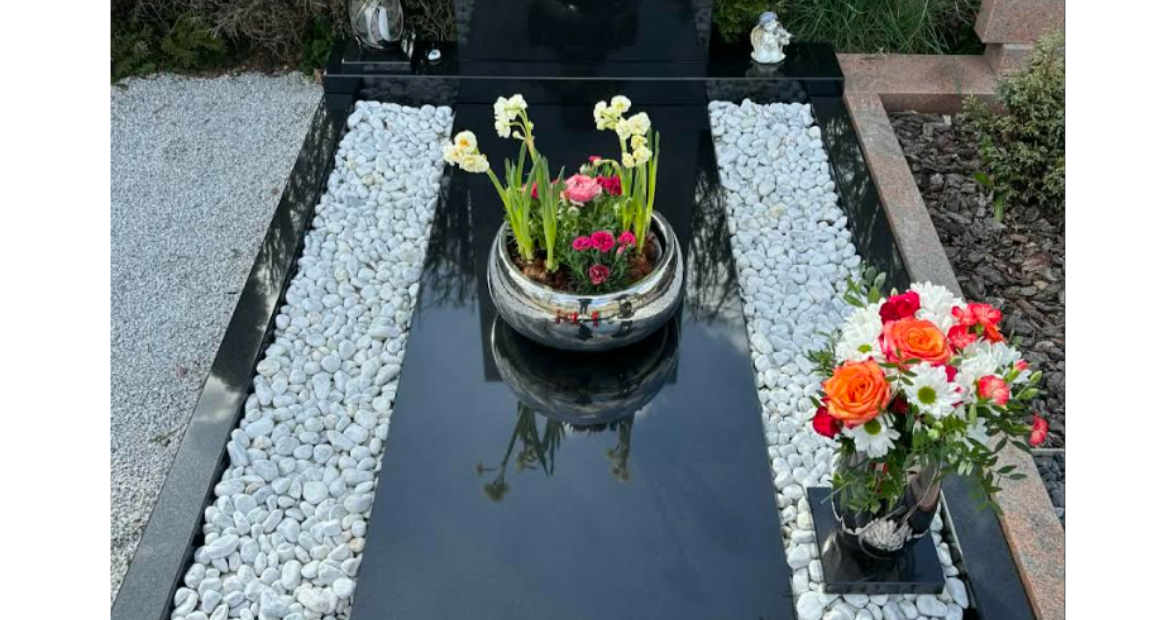
Twice a week she went to the cemetery with fresh flowers, as she wanted her father's grave to be neat. However, this is no small expense. If she had to buy a bouquet each and every time, it would cost her quite a lot.
And then something happened that left her far from indifferent. People from the house where she had helped out after the floods a few months ago offered to come to her aid. She hadn't asked them to. She hadn't told them she needed flowers.
Feeling as though she needed them now, they brought her fresh flowers for her father's grave twice a week. Without big words. They simply rushed to her aid.
Perhaps they remembered her hands, which had helped clean their home after the floods. Perhaps they remembered her time and willingness to come when she was needed. Perhaps they didn't even think about it, but simply saw a person in need of help and did what others had once done for them. And therein lies the beauty of mutual aid.
Sometimes it comes in the shape of a shovel and a wheelbarrow, when mud needs to be cleared away after a flood. Other times it comes in the shape of a bunch of fresh flowers that someone brings to your door because they know you'll need it. Such help has a special value.
Sometimes a person needs nothing more than the feeling that someone sees them and notices their distress, even before they know how to express it.
My interlocutor had helped when they were in trouble. When life put her before a difficult trial a few months later, they helped her. Good was returned with good.
Sometimes you help someone with a single word, another time with a few hours of work, and sometimes by helping to clear up the aftermath of a natural disaster. And sometimes all of that comes back in the form of two small bunches of fresh flowers a week.
Flowers that were not just that to her, but a message that she was not alone in what she was going through. Perhaps the greatest thing a person can receive when going through a difficult period is the feeling that someone is thinking of them and sees their pain.
Another story thus evolved from the one about the floods in Moste. It became a story about people who knew how to pull together.
Maja Grošelj, 11 August 2026
 English (UK)
  Slovenščina
  Italiano
  Magyar