

1. Activity title: Your affiliation
2. Target group
- Pupils in years 1-5 of primary school (adaptable for pre-school).
- Estimated duration: 1 to 2 school hours
3. Form of work
Classroom work, individual work, group activity, discussion
4. Didactic starting points
The activity is based on understanding cooperation and belonging to a group. Pupils learn that each individual contributes their own piece to the collective success. The emphasis is on mutual aid, connection, and the value of belonging, which gives a sense of security and community strength.
5. Learning objectives
- To understand that we can achieve more through cooperation than on our own
- to recognise that each group member has an important role
- develop empathy and a willingness to help
- to strengthen the sense of belonging and interconnectedness
- Cooperation and responsibility towards the group
6. Accessories
- Boxes/packaging
- little twigs, sticks, pebbles...
- Flomaster, tempera
- Glue
7. Course of Activities
The teacher reads page eight and leads a discussion about what was read.
Interview questions
- Have you ever observed how people collaborate in joint work?
- How can you contribute to shared goals (e.g., in the classroom, family)?
- How do you feel when you achieve something more together with others?
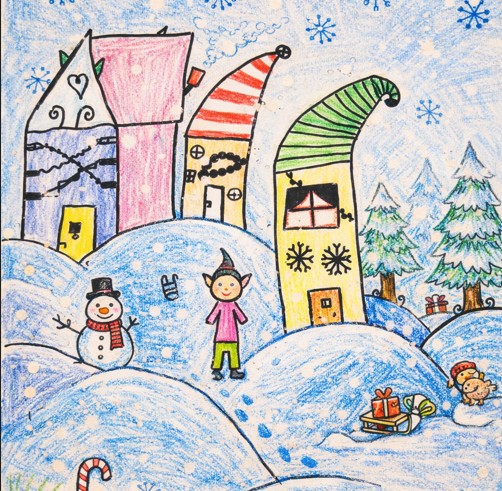
8. Art activity: Classroom village
Objective Visually depict how everyone contributes their piece to the community and how collaboration works.
Flow:
- Every pupil makes their own house and writes their name on it.
- Kreativnost.
- The huts join together into a large village.
- Let's discuss how each house and each property/knowledge contributes to the overall community.
9. Physical Activity: Spiderweb
Objective Increase the sense of belonging and mutual trust.
Accessories
- Wave
Flow:
- The pupils are standing in a circle.
- Then one scholar holds the end of the wool and passes it to another who states their name and the quality/knowledge they contribute to the group. This scholar holds the thread, and tosses the ball to another...
- This is how you create a “spider's web” – each student holds a part of the web.
- Dialogue: What does the web symbolise? What would happen if someone let go of a strand?
- Option: we can play several rounds or make the game more difficult – e.g. stand on one leg during the game, catch the wool with only one hand...
- Option 2: As they pass the ball of wool to each other, they say one compliment or something they value about each other.
10. Conclusion and reflection
Final thought: »We are all an important part of our community in the classroom.«
Let's talk about why awareness of belonging to a community is important and how we demonstrate it. Let's steer the conversation towards the fact that every member of our community is important and contributes greatly.
Primary School Piran
 English (UK)
  Slovenščina
  Italiano
  Magyar