

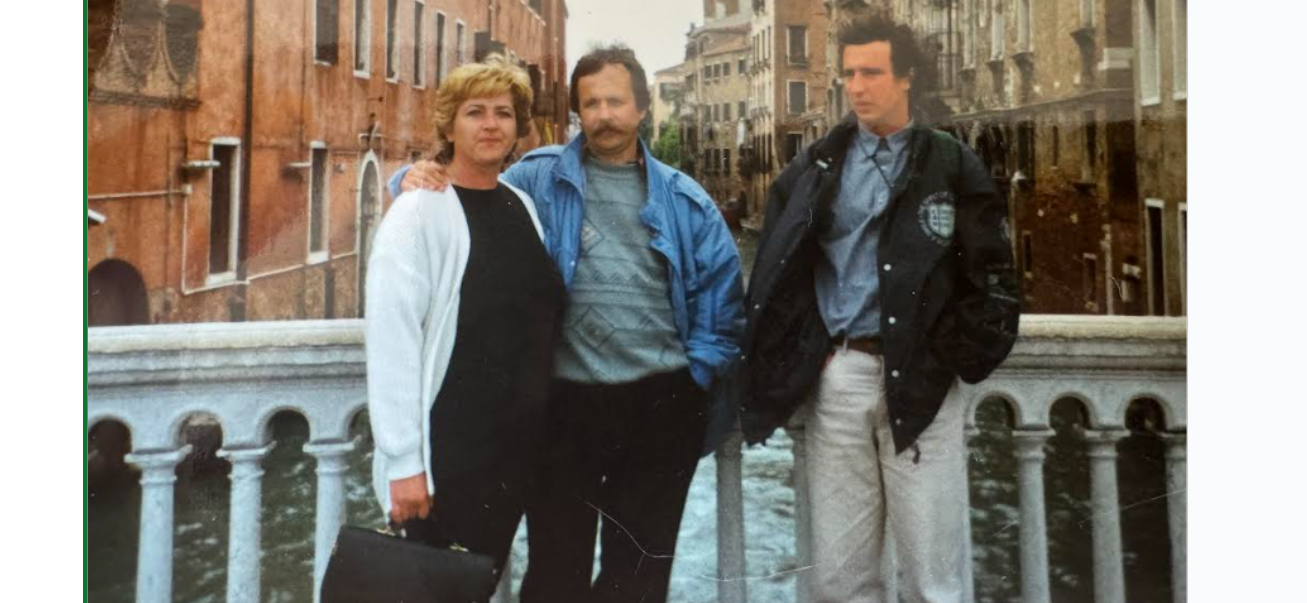
Three travellers, united by their passion for discovering new places, wanted something different from the hill paths and coastline they are used to in Slovenia. "We have to experience Venice together one day," Lidija insisted, and so they got in the car and set off for the lagoon city.
From the first moment they stepped off the train at Santa Lucia station, they were enveloped by the smell of the sea, the humid air and the sound of the gondolas gently hitting the edges of the canals. My friend whispered enthusiastically, "It's like stepping into a painting." Marko, always a little more down-to-earth, added: "Just don't make it too touristy." Lidija smiled. It was this balance between expectations and moderation that had always kept them together.
As they lost themselves in the narrow streets, they quickly felt the special pulse of the city. Venice is not just about postcards and gondolas, but also about the smell of freshly baked cookies from small bakeries, the voices of locals chatting in dialect in the Rialto market, the old men carrying bags of vegetables across the bridges with slow steps. It is also about the tourists, the crowds of the latter, swarming towards St Mark's Square.
"Look," said Lidija, pointing to a small trattorio in a side street, where there was a sign saying: Menu del giorno - 12 euros. They sat down at the table without a second thought. Instead of going to one of the expensive restaurants, they opted for simplicity - a plate of pasta, a glass of house wine and a smile from the waiter, who told them that the place had been family-owned for three generations. The food was simple but hearty, as was their attitude to life: enjoy the little things, don't overdo it, let the place accept you for who you are.
In the days that followed, they explored hidden corners. They avoided expensive gondolas and boarded vaporetto, a public water bus where they sat among the locals. The feeling was more authentic - the wind ruffled their hair as they sailed past the islands of Murano and Burano. On Burano, they walked among the colourful houses and wondered what it would be like to live here, in peace, away from the crowds.
But every evening, when they returned tired to the small apartment they had rented, the conversation turned to the same question: 'Could we live here?' Lydia nodded eagerly at first, but as she watched from her balcony the locals rushing home with their bags and the gondoliers quietly locking their boats after a hard day, it hit her: Venice is beautiful, but it is not their home.
Marko voiced these concerns aloud: "You know, everything is beautiful here, but I have the feeling that Venice is like a precious pearl - shiny, but also fragile. It's nice to visit, but you can't be here every day. Our daily life has a different rhythm."
On the last day, they went to St Mark's Square. The sun was shining on the facade of the Basilica, the pigeons were circling above them and for a moment the three of them were completely silent. They felt the grandeur of the moment, but also a quiet nostalgia for home. They knew in their hearts that something special was waiting for them - not only memories of Venice, but also a realisation, that it is their roots that make them truly free as travellers.
On the train back to Slovenia, my friend looked out of the window and said.»The best thing about travelling is that at the end of it, you come back to a place where familiar faces are waiting for you.« Lidija smiled and Marko added: »Travel is a gift - it shows you the world, but more importantly, it shows you where you really belong."
And so they returned - full of impressions, full of gratitude. They learned to The beauty of the world shines even brighter when you know you have somewhere to hide. Home is not the opposite of travel, but the meaning of it.
Zala Krupljan, 10. 8. 2025
 English (UK)
  Slovenščina
  Italiano
  Magyar