

It was not the restlessness of the city streets, but the pleasant pulse of nature calling you to work. The fields were increasingly quiet, but it was only then that the orchards really came to life. The apple trees, lined with heavy red fruit, were waiting for diligent hands.
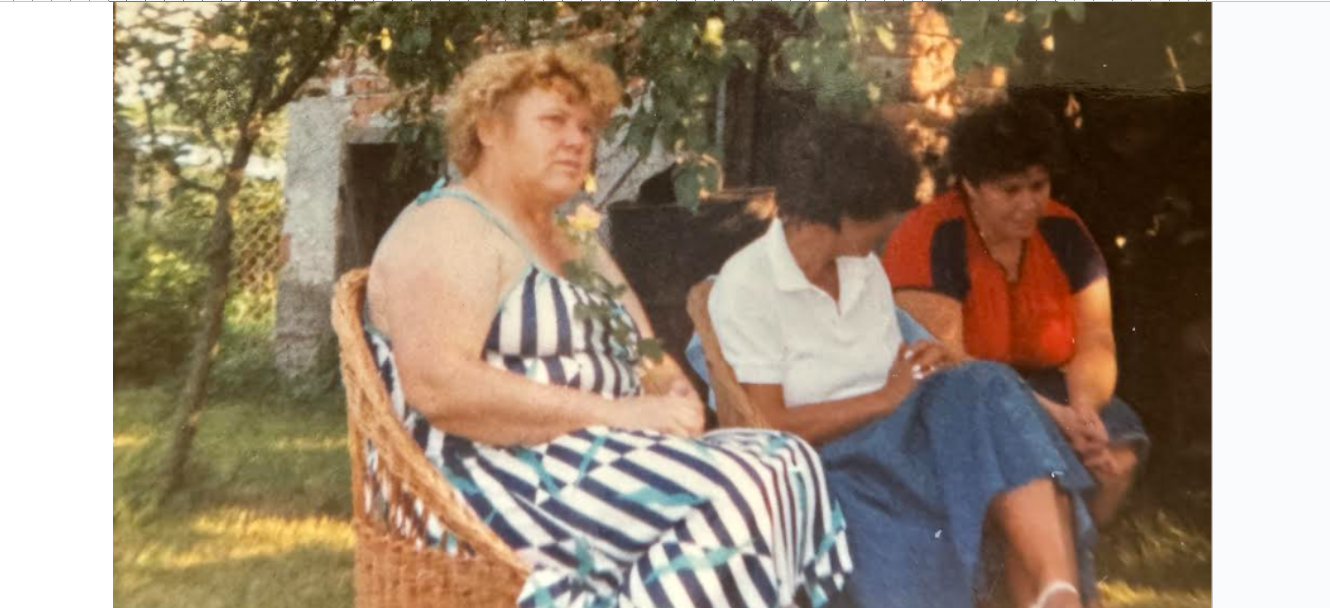
My grandmother used to go every year with her friends to help a neighbour who had a fruit farm. "You know, my child," she told me many times, "when it's time to pick, it doesn't matter whose apples it is. What matters is that the work gets done and that we help each other." And indeed, for them it was not just an obligation, but a holiday that smelled of homesteading, friendship and togetherness.
The women had already gathered early. They brought scarves, aprons and baskets. They greeted each other with warm hugs in the courtyard, as if they had seen each other after a long time, even though they had met the day before in the village. There was something special in their voices - that mutual warmth that only comes when people know how to make time for each other.
When they entered the orchard, they could feel all the beauty of autumn. The leaves rustled underfoot and the air was cool, but filled with the sweet smell of ripe apples. The women arranged themselves among the rows of trees and began their work. One gently picked the fruit and placed it in a basket, another carefully sorted it by size, and a third carried it to the crates.
No foetus was too small or insignificant. Not even the one with the small spot. They knew how to use the latter - for jam, juice or strudel. "Nothing should be thrown away", said the grandmother, expressing her respect for the nature that had given them the fruit.
During the work, the conversations blossomed like flowers in spring. They talked about families, about joys and worries, about the old days when they were still girls and went out to pick their own crops. When the conversation became too serious, one of them would tell a joke and they would all laugh so loudly that it echoed through the trees. It was as if the apple trees had listened and were rejoicing with their fruit.
It was a real feast for the children who ever came around. While they were picking, we were picking up apples that had fallen on the ground and hiding behind the crates. The best part was when my grandmother secretly took an apple out of the basket, wiped it with her apron and handed it to me, "Here, try this. This is an apple that tastes like home."
As the sun began to set and the full boxes were waiting for the carts, the women sat down on a bench in front of the house. One brought coffee, another a plate of pastries and a third a bottle of homemade juice. Looking at the tired but happy faces, it was clear that this was not just a working day - it was a community day.
My grandmother always said that true wealth is not measured in money, but in the number of hands that join you when you need them. And in that autumn season, that richness shone on every face.
Apple picking was not just a job. It was a bond between people that served as a reminder that life is easier when it is shared.
Today, when I think of Nova vas and those autumn days, peace settles in my heart. I know that through these stories I have received something precious - the awareness that tradition is something that lives not only in books but in deeds.
They have created memories that smell of autumn, a sense of security that only a homestead can give, and the quiet certainty that you are never alone as long as you have people who are willing to come alongside you.
And that's why apples are more than just fruit for me. They are a symbol of childhood, of warmth and of friendship that never goes away.
Zala Krupljan, 16. 8. 2025
 English (UK)
  Slovenščina
  Italiano
  Magyar