

It was cold in the house, the windows were steamy, and the stove had begun to crackle softly, as if it too were waking up. A scent wafted from the kitchen – smoke, milk, and something homely that I couldn't yet name. Today, I know it smelled of belonging.
Grandma, in her blue apron, stood by the stove. Her hands were rough from work, but gentle as they caressed my face. On the table was a bowl, next to it a wooden spoon and a bag of buckwheat flour.
»Today, it's polenta,« she said, as if announcing something sacred.
At the time, they didn't seem special to me. I didn't understand why someone with so much patience would mix flour and water, or why they would bother with a dish that was neither colourful nor modern. I wanted pancakes, Choco-Nino, or something else advertised on television, but Grandma would just quietly shake flour into a pot and say, »My child, a person must know where they come from, otherwise any wind can blow them away.«
I didn't understand the words.
While the buckwheat porridge was cooking, she told me about her childhood. About the winters from a time when shops weren't full. About the hands that sowed buckwheat. About a mother who knew how to make a meal for hungry mouths out of nothing. About people who didn't have much, but knew how to help each other.
»The worth of a Slovenian is not measured by what they have,« she said, »but by how courageous they are when life takes almost everything away from them.«
Then she took a wooden spoon and began to break up the *žganci*. Every movement was slow, precise, almost ritualistic. She wasn't just cooking food, but also the memories and history of our people.
In that pot were poverty, pride, stubbornness, earth, sweat, prayer, and love. It was Slovenia; not the one from maps, but the one from kitchens, from wooden tables, and from grandmothers' hands, which knew how to give a child the last piece of bread.
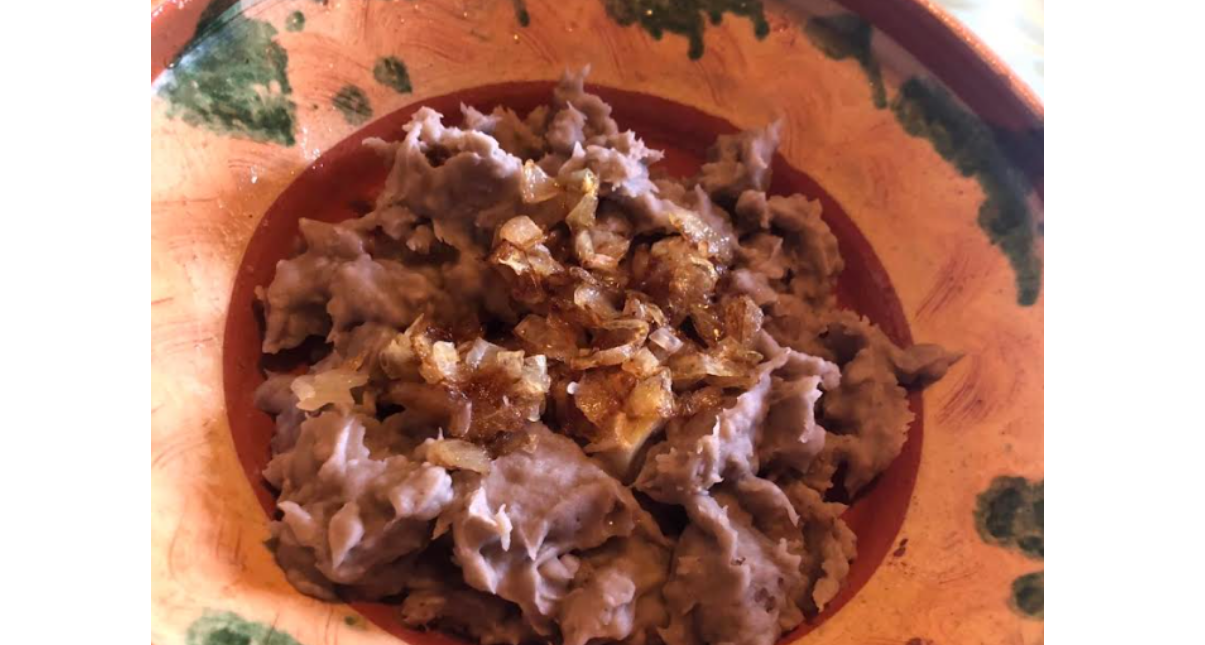
When the bowl was placed before him, warm clouds rose from the polenta. She garnished it with crackling and poured sour milk alongside.
»Oh,« she said. »That's ours.«
That was the first time I really looked at her hands. They were cracked. Short nails, and on her knuckles, furrows like after ploughing. And suddenly, it hurt. There was so much life in those hands, so much quiet toil, so many unspoken worries. Grandmother never spoke of what she had lost, but rather of what needed to remain. That day, I ate everything.
The years have passed. Grandma is no longer here. Her kitchen is silent. The stove does not crackle. The apron is folded in the cupboard, as if waiting to be tied around someone's waist again. I have often eaten more expensive, more beautifully presented, and more modern dishes, but none stopped me in my tracks quite like those buckwheat žganci.
Today, when I sift buckwheat flour into the pot myself, a lump forms in my throat. Not because the dish is complicated, but because I know there's something within it that we must not lose.
Our cultural heritage isn't just national costumes, songs and festivals. It's also the humble bowl on the table. It's grandma's voice. It's the smell of home cooking. It's the awareness that we belong to the land, the language, the people and the memories that have shaped us into who we have become.
Grandmother's buckwheat groats didn't just teach me what it means to be full. They taught me what it means to be myself.
And today I know: a nation doesn't disappear when it loses its wealth, but when it starts to be ashamed of its roots. When buckwheat porridge seems not grand enough. When grandma's cooking becomes too simple. When it forgets that someone before them lived harder, worked more, and ate less, just so they would one day have more.
So today it pains me every time I see a bowl of buckwheat porridge. Not because of hunger, but because of the memory.
Because I no longer see just food in it. I see a grandmother who silently carried the world on her shoulders. I see her cracked hands, which didn't know how to ask for themselves, but knew how to feed others. I see all Slovenian mothers, grandmothers and great-grandmothers, who didn't have many words, but had something that is often lacking today; dignity, stubbornness, love and pride.
Grandma's buckwheat porridge was her letter to me. A letter without ink, signatures, or grand words.
It simply said: Don't forget who you are. Don't forget where you come from. And never be ashamed of simple things, because those are the very things that once saved your kind.
I understand now that Grandma wasn't just cooking for me.
The past is for all who come after it. If only one of us would someday understand that heritage does not live in museums, but in memory. In language. In the earth. In the bowl on the table. In a tear that falls where her sweat once fell.
When I am gone someday, I wish for only one thing: that someone will put on a pot of water, stir in buckwheat flour, and pause for a moment. That they will feel, remember, and understand.
As long as someone knows how to cook buckwheat mush and says of it: »This is ours,« grandmother will not die. And neither will we.
Zala Krupljan, 12 April 2026
 English (UK)
  Slovenščina
  Italiano
  Magyar