

POSTER Why lying doesn't pay
Objective Argumentation and evaluation.
Activity
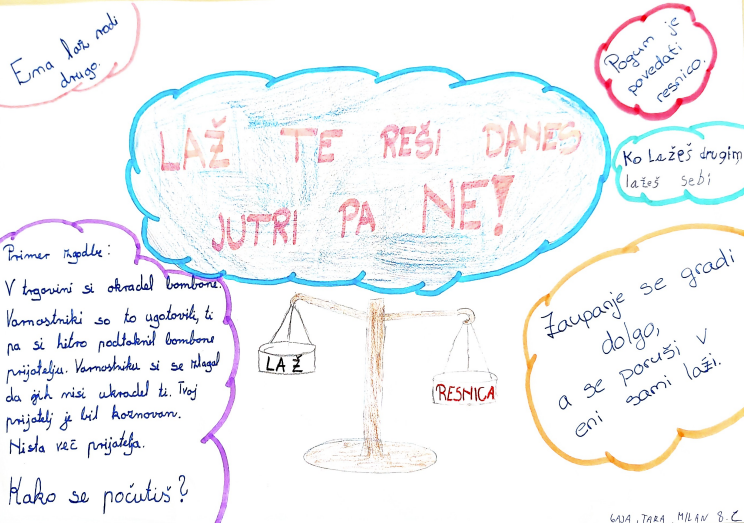
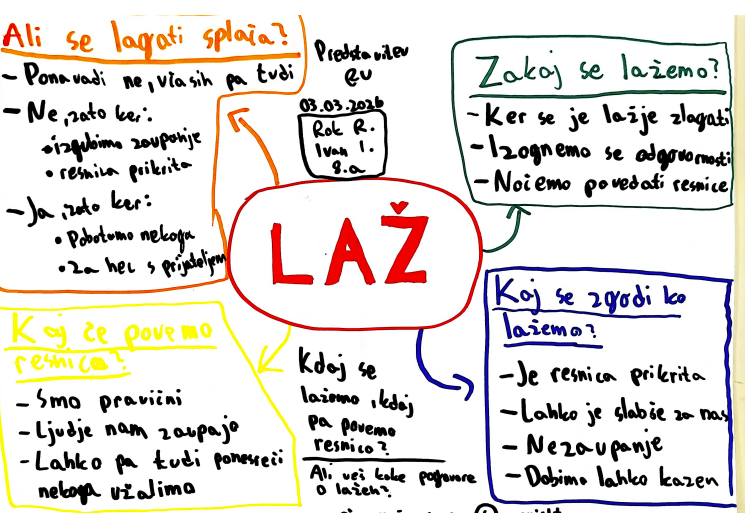
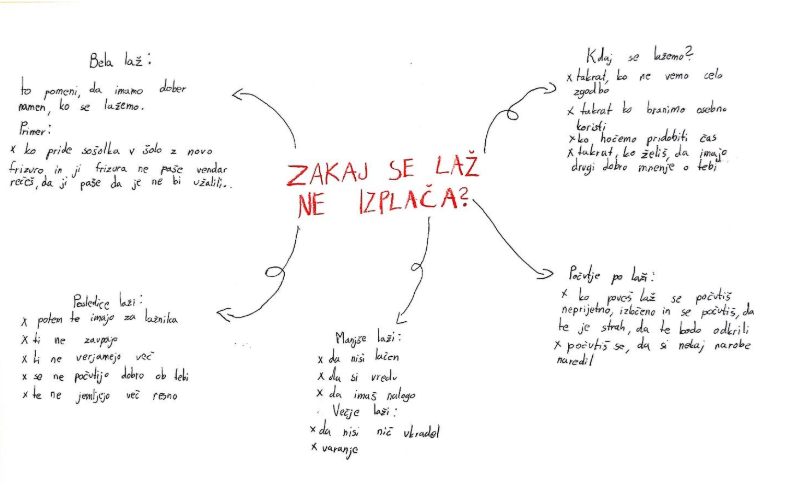
- Group poster design (title, slogans, examples).
- Poster presentation.
Emphasis: Short-term gain vs. long-term consequences.
Foreword (5-10 minutes)
Chat:
- What does it mean when a lie “doesn't pay off”?
- Are there situations where a lie seems to bring benefit?
- The consequences of lying for an individual can include damaged credibility, guilt, anxiety, and isolation. For others, the consequences can be betrayal, loss of trust, emotional distress, and practical problems arising from decisions made on false information.
On the board, write the keywords: short-term gain, long-term consequence, integrity, trust, responsibility
MIDDLE SECTION (25 minutes)
1. Poster instructions
- Pupils work in groups (3–5 pupils).
- The poster must contain:
- Title – attractive and clear.
- Slogan – short messages warning of the consequences of lies.
- Primer A true situation or a fictional story that shows that lying doesn't pay off.
- Visual elements – drawings, symbols, colours to emphasise the message.
2. Group work
- The teacher is encouraging discussion:
- Which lie might seem “useful” in the short term?
- What are the long-term consequences for an individual or group?
- How could the situation be resolved fairly?
- Pupils will create a poster and prepare a short presentation (1–2 minutes).
CONCLUSION (10 minutes)
Each group will present a poster and explain its message.
- Conversations about messages:
- Which situation do you find most instructive?
- How can we avoid short-term “gains” that lead to long-term problems?
Teacher's shop: »A lie may offer a quick solution, but in the long run, it causes a loss of trust and problems. Honesty is always the better choice.«
Primary School Kranj
 English (UK)
  Slovenščina
  Italiano
  Magyar