

She didn't often talk about them, but when she did, she always said: With Herbert and Rosica, you knew what you were in for. Not because she was explaining it, but because it was reflected in the way they lived.
The event Lidija remembers took place in Spodnja Nova vas near Slovenska Bistrica when she was still a teenager. At that time, the farmer worked by hand and without any special organisation. If help was needed, acquaintances and neighbours were called in. They came, worked and went. In return for their work, the farmer always gave them a financial reward. Herbert and his wife Rozika were among these people.
They worked together as they were used to. In tandem. Herbert was calm and persistent, he didn't like to start, but always thoughtfully saw the job through to the end. He was not a man in a hurry, but he had a sense of what needed to be done. Rozika was there all the time and she was working too. It was potato and apple season. They worked quite hard and very diligently, because in those days the farmer supplied several local cooperatives with his produce.
It was a long day. By the evening, everyone was tired. When the work was finished, the owner distributed the pay to everyone. Everyone got an envelope. No one counted how much he got. It was not done in those days. It was about mutual trust. People put their money away and went their separate ways. Everyone was heading for home.
As they were leaving, Herbert was stopped by an acquaintance. He didn't speak out loud, probably because he was afraid of being overheard. He told him that he had heard from someone that the owner had overpaid everyone; that he had made a mistake, and an obvious one. That they were all getting more than what had been agreed. He went on to say that this would not be discussed because everybody got the same, so nobody was disadvantaged.
Herbert didn't answer, he just listened. Rozika was standing next to him, so she heard it all herself. She did not ask him what he was going to do. She didn't tell him to leave. She just knew that they would talk about it at home, when they were alone.
When they opened the envelopes at home, it was immediately clear that there was too much money. Not a little, but so much that it was impossible to ignore. So much that it would have been very easy to keep quiet and say it was not their fault.
Rozika counted the money and said, »We can't keep this.« Herbert said he would go back. They didn't argue that night. The decision was clear, even if it was not pleasant.
The next day, Herbert went to the farmer. Alone. He told him why he had come; that they were overpaid, that the money was not his. He put it on the table. The farmer was surprised. He said that no one else had come forward and that he might as well keep it, because apparently everyone was getting (too) much.
Herbert replied that he didn't look at what other people did, that he couldn't do it and that it wouldn't be right for him to keep the money.
It was later found out that he was the only one who returned the money. Not because the others were bad people, but because it was easier to keep quiet. The participants he talked to about this were unanimous in their opinion that it was not their fault. They hid in the crowd.
Aunt Rozika is not fond of talking about this event. She said it was nothing special. That you just know what is yours and what is not, and that you don't negotiate about it.
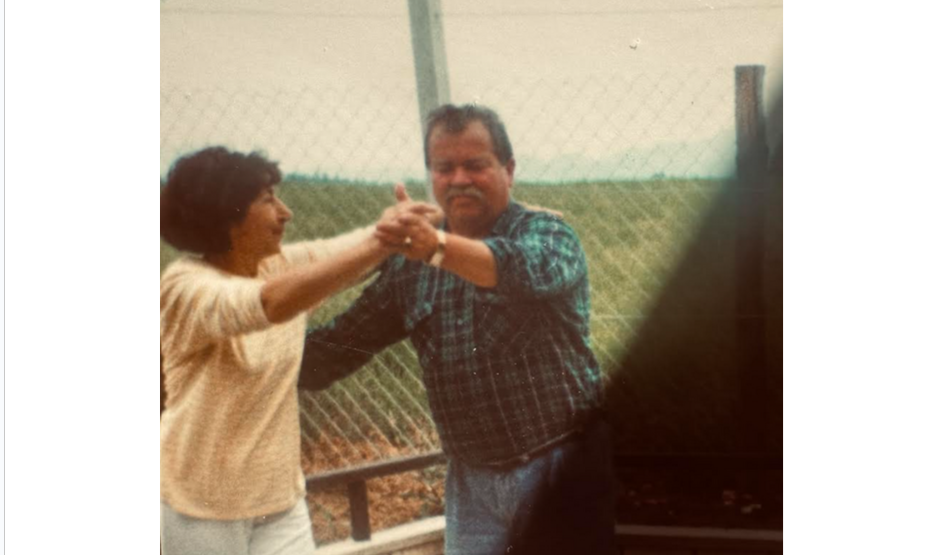
In the photo of them dancing, you can see what they were like. They are not looking at the camera. They are dancing in their own way, relaxed and - if you ask me - with a genuine degree of authenticity. That's how you dance when nothing is weighing you down. When you know that you have brought home only what is yours, and that some rules do apply: Whoever takes more than his due does not enrich himself, but burdens himself. But he who is able to (re)leave what is not his may be left with a little less in his pocket but a lot more in his.
Zala Krupljan, 9. 1. 2026
 English (UK)
  Slovenščina
  Italiano
  Magyar