

He knows me from when I was a child, running in the corridors and thinking the world was simple. Even then, she was quietly watching, helping and caring. Never intrusive. Always respectful and with a sense that she saw the person, not just their external roles.
She is about 60 years older than me, but sometimes I think she has more strength, patience and wisdom than many people much younger. She is not bitter, she does not complain and she never gives the impression that the world owes her anything, although she would have ample reason to do so. Instead, she has an open heart and helping hands.
She lives in a block of flats on Škalska Street, one of the first blocks of flats in Slovenske Konjice, built of concrete and full of stories. There live people who have worked all their lives and now live on low pensions. People who have learned to be frugal because they had no other choice. People who often keep quiet about their problems because they do not want to pass them on to others.
I lived there myself a few years ago. I know what it's like to learn to live with little. When you learn not to talk too much about your hardships. When you learn to bear it and move on. And that is why I know how important it is to have someone by your side who notices when things are hard.
Rozalija, or Ruža as we all call her, has never taken this for granted.
In our country, its kifli almost a symbol. Not because they are perfect, but because they are made with others in mind. There are always more than I need, and that is the charm. They are always for someone who is passing by, someone who is lonely, someone who needs to feel that they are not alone. Before December, at the request of her family, she cooked a sarma, which they love. And since she argues that sarma is only good if you cook it in large quantities, it was what it was.
Given that she has a great sense of people and that it has never been difficult to feed some hungry mouths that don't have any, this time she also noticed that the people around her don't have much anymore. That some of them are sick, others are tired of life, and still others are counting how they will get through the month.
And she decided to take action.
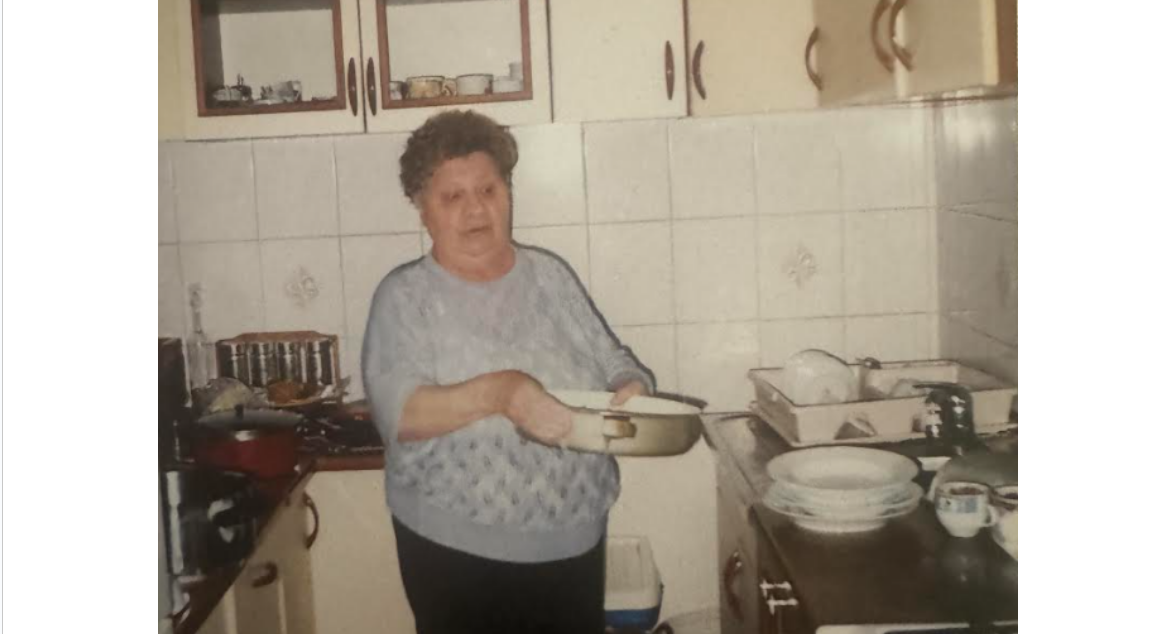
She spent hours standing by the stove in the small kitchen. She was cutting cabbage, mixing a stuffing made from home-ground meat sourced from a local farmer, and turning leaf after leaf. The steam dewed her glasses and her back ached, having borne the burdens of life for years.
She cooked a big pot of sarma. So big that it was enough for almost the whole block. Besides, she fed all her own.
Then she divided the rations into the ice-cream and cottage cheese tubs she always saves and knocked on the door. »I cooked a little,« she said, »so you'll have a hot meal.«
Some looked at her in silence, some thanked her with tears in their eyes, others could not find the words.
That day, in my eyes, it was not only the food that was distributed, but the feeling of security. A sense of belonging. A feeling of being part of a community that cares for each other.
It was first aid; the kind that cures loneliness, fear and feelings of abandonment.
Today, we often talk about individualism and the need for everyone to fend for themselves. But the truth is that one human being cannot survive without another human being. Without compassion, understanding and a willingness to help each other, we are just lonely individuals in a crowd. Mutual help is not a sign of weakness, it is a sign of a strong community. It is proof that we can still see each other, feel each other and stand together when it is hardest.
At a time when people are increasingly withdrawing into themselves, when we rush past each other and no longer have time to talk, she is proof that mutual assistance is the cornerstone of humanity.
And as long as we can stand together, as she can with others, there will always be enough warmth between us for everyone.
Zala Krupljan, 13. 1. 2026
 English (UK)
  Slovenščina
  Italiano
  Magyar